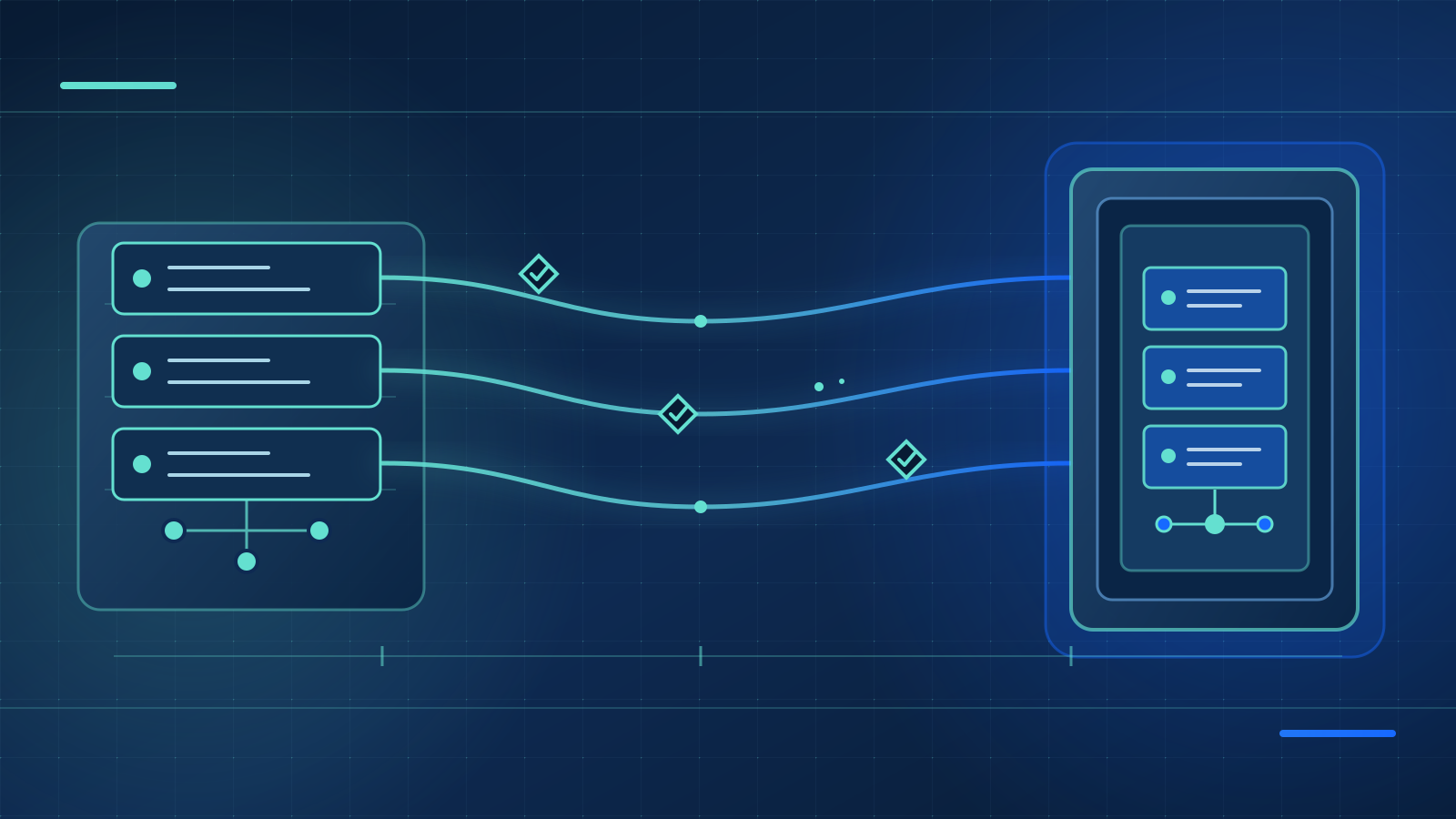
Cloud engineering is the discipline of designing, building, securing, delivering, and operating cloud-based systems as reliable, repeatable products. It connects three responsibilities: cloud architecture defines what the system should be, cloud infrastructure creates that system through code and automation, and cloud operations keeps it secure, observable, recoverable, and cost controlled in production.
Unlike basic migration, this discipline covers the operating lifecycle, from workload assessment and landing-zone design to infrastructure as code, CI/CD, observability, incident response, disaster recovery, and FinOps. It helps teams release safely, recover from failure, scale workloads, and connect spending with business value.
This article explains how these responsibilities work together in production.
What Cloud Engineering Actually Covers
The work converts requirements into deployed, measurable services. Teams must connect each requirement to an architecture decision, implementation code, and production evidence. Without that traceability, ownership becomes unclear and teams cannot verify controls or recovery.
In practice, the work includes:
- Translating product, regulatory, availability, and growth needs into requirements.
- Selecting regions, accounts, networks, compute, data, and services.
- Building landing zones and reusable infrastructure through version-controlled code.
- Automating tests, security checks, releases, rollback, and promotion.
- Measuring health with metrics, logs, traces, service objectives, and user signals.
- Managing identity, secrets, vulnerabilities, backups, and recovery.
- Allocating cloud spend to owners and optimizing cost without weakening outcomes.
- Documenting ownership, incidents, decisions, and procedures.
NIST SP 800-145 defines cloud computing through five essential characteristics, three service models, and four deployment models. Engineering adds an operational test: each environment should be reproducible, measurable, reviewable, and supportable.
CodeCones next step: Need help planning your cloud environment? Explore CodeCones cloud engineering services for architecture assessment, risk priorities, and an implementation roadmap.
Architecture, Infrastructure, and Operations: The Difference
The three layers answer different questions and produce different evidence. Separating their responsibilities makes ownership clearer without separating their delivery.
| Layer | Primary question | Typical decisions and outputs | Evidence of quality |
|---|---|---|---|
| Cloud architecture | What system should exist, and why? | Workload boundaries, regions, service choices, data flows, trust zones, resilience patterns, decision records | Requirements map, threat model, target diagrams, recovery design |
| Cloud infrastructure | How is the approved design created consistently? | Accounts, networks, identity, compute, storage, databases, policies, infrastructure as code | Reviewed plans, automated tests, drift detection, repeatable environments |
| Cloud operations | How is the live service kept safe, useful, and efficient? | Monitoring, alerting, incidents, capacity, patching, backup, cost review, service ownership | SLO reports, recovery tests, incident learning, cost allocation, audit records |
Architecture decisions should map to versioned implementation, and production findings should update those decisions. Otherwise, teams cannot explain why a resource exists, confirm it matches an approved design, or use incidents to prevent recurrence.
A Five-Plane Model for Modern Cloud Systems
A cloud platform can be understood as five connected planes, each with a distinct job and measurable controls.
- Workload plane: Applications, APIs, data services, event flows, and background jobs that create customer value.
- Platform plane: Approved runtimes, service templates, container or serverless patterns, shared data capabilities, and developer self-service.
- Control plane: Identity, policy, secrets, encryption, network boundaries, asset inventory, and audit evidence.
- Delivery plane: Source control, infrastructure as code, CI/CD, artifact integrity, testing, approvals, progressive release, and rollback.
- Operations plane: Telemetry, SLOs, alerting, incidents, capacity, backup, recovery, vulnerability response, and FinOps.
The model exposes ownership gaps. Product, platform, security, and SRE teams may control different planes. Each interface needs an accountable owner, expected response, and evidence that its controls work.

Cloud Architecture Starts with Constraints, Not Services
Good cloud architecture begins with workload evidence. The team should document users, critical journeys, data sensitivity, dependencies, latency, traffic patterns, recovery objectives, compliance obligations, expected growth, and operating skills before selecting products.
The main architecture decisions include:
- Deployment model: Public, private, hybrid, or multi-cloud, chosen for a real requirement rather than provider anxiety.
- Account structure: Separation for environments, products, security, and billing ownership.
- Regions and availability zones: Placement based on users, data residency, failure tolerance, and recovery.
- Network design: Ingress, egress, private connectivity, segmentation, DNS, and dependencies.
- Identity model: Workforce federation, workload identities, privileged access, and least privilege.
- Compute pattern: Virtual machines, containers, serverless functions, managed platforms, or a justified mix.
- Data design: Storage, consistency, replication, retention, encryption, backup, and deletion.
- Resilience pattern: Redundancy, graceful degradation, retry limits, failure isolation, and tested recovery.
Microsoft’s landing-zone guidance separates shared foundations from workload environments. Central teams provide identity, connectivity, policy, logging, and governance while workload teams deploy within approved boundaries. A landing zone shortens setup while enforcing controls automatically.
Infrastructure as Code Makes the Design Repeatable
Cloud infrastructure is the deployed state that implements the approved architecture. A console change may be quick once, but repeated manual changes create drift, inconsistent environments, weak review, and slow recovery.
Infrastructure as code defines resources in version-controlled files. A safe workflow should include:
- Reusable modules with documented inputs, outputs, owners, and versions.
- Separate state and access boundaries for environments and sensitive components.
- Validation, tests, security scanning, and policy checks before deployment.
- A plan showing proposed additions, changes, and deletions.
- Approval rules based on change risk.
- Deployment identities with short-lived credentials and limited permissions.
- Drift detection for changes outside the approved workflow.
- Tested rollback or forward-fix procedures.
Not every resource needs one tool or repository. The required outcome is traceability: teams should know which code created a resource, which review approved it, and how to restore a safe state. Platform engineers can package frequent patterns while documenting justified exceptions.

Modern Cloud Operations Is Continuous Control
Cloud operations applies continuous control to running services across user impact, incidents, recovery, security, capacity, and cost. These requirements belong in architecture and delivery decisions before launch.
A complete operating model covers six areas:
1. Service health and observability
Organize metrics, logs, and traces around critical user journeys. Define indicators such as checkout success, API latency, or data freshness. Set objectives that reflect user needs and alert when they are at risk. Healthy infrastructure does not prove that a customer can complete a task.
2. Incident response and learning
Define severity, command roles, escalation, communication, and decision authority. Every high-impact incident should produce a blameless review, owned corrective actions, and verification. Track recurrence and remediation age because a completed postmortem does not prove that risk decreased.
3. Reliability and recovery
Set recovery time and recovery point objectives from business impact. Restore backups and exercise dependency failure, regional impairment, expired credentials, capacity pressure, and rollback. Record achieved recovery time and data loss. An untested backup does not prove recoverability.
4. Security operations
Review identities, vulnerabilities, exposed services, policy violations, secrets, and suspicious activity. Protect audit records and connect findings to owners and deadlines. Preventive guardrails block unsafe configurations; detective controls identify violations and threats that still occur.
5. Capacity and performance
Measure demand, saturation, latency, throughput, and dependency limits. Autoscaling helps only when thresholds, quotas, startup time, and downstream capacity are understood. Test critical paths and failure behavior, not only peak throughput.
6. FinOps and resource ownership
Allocate spend by product, environment, and owner. Review anomalies, idle resources, commitment coverage, unit cost, and forecast variance. Flexera’s 2025 report reports that 84% of organizations consider managing cloud spend their top cloud challenge and that cloud budgets exceed limits by 17%. Cost evidence should inform architecture, capacity, and product decisions.
CodeCones next step: Teams that need measurable SLOs, observability, incident systems, and recovery validation can connect platform work with CodeCones site reliability engineering services.
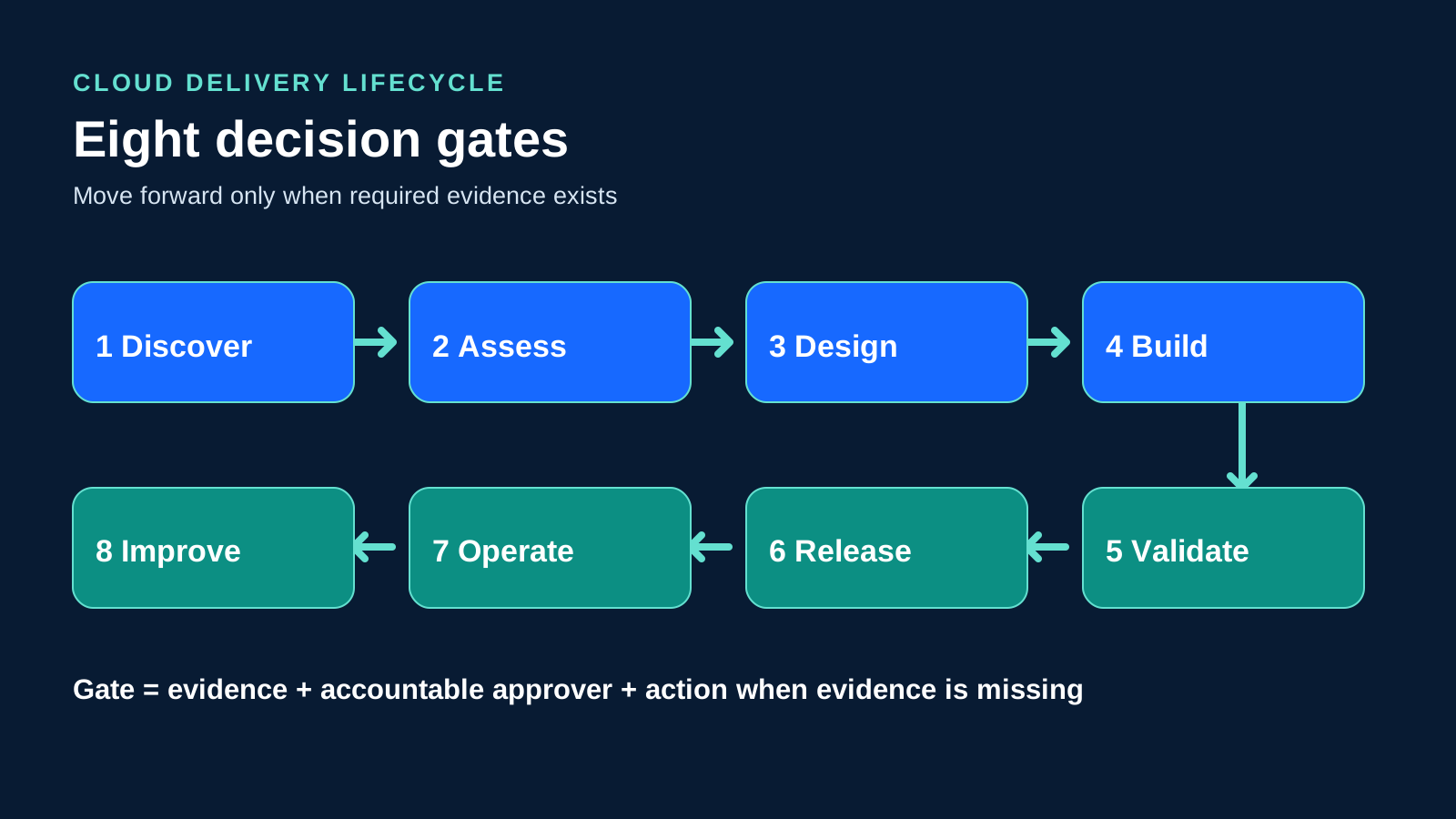
The Cloud Delivery Lifecycle
The delivery lifecycle connects early decisions with production results. Each stage produces evidence for the next.
- Discover: Inventory workloads, dependencies, data, costs, incidents, delivery paths, constraints, and owners.
- Assess: Identify architecture, security, reliability, delivery, skills, and governance gaps using available evidence.
- Design: Record target decisions, rejected alternatives, controls, migration waves, success measures, and responsibilities.
- Build: Implement landing zones, infrastructure modules, pipelines, policies, telemetry, and operating artifacts.
- Validate: Test functional behavior, performance, security, failure handling, backup restoration, and rollback.
- Release: Use controlled promotion, observable change, clear go/no-go criteria, and a rehearsed recovery path.
- Operate: Measure SLOs, incidents, vulnerabilities, capacity, spend, developer experience, and control performance.
- Improve: Convert evidence into prioritized changes, update reusable patterns, and remove recurring toil.
Each stage should end with a decision gate naming required evidence, the approver, and the action when evidence is missing. Gates should stop unsafe transitions without delaying low-risk work.
Production Readiness Checklist
Use the following checks before a new workload or major change reaches production. For a deeper assessment, see the Cloud Engineering Readiness Checklist.
| Area | Minimum evidence before release | Warning sign |
|---|---|---|
| Ownership | Named product, technical, security, and operational owners | Shared mailbox or “the platform team” owns everything |
| Architecture | Approved decisions, dependency map, data classification, failure assumptions | Diagram exists, but tradeoffs and dependencies are undocumented |
| Delivery | Reviewed code, tested pipeline, artifact integrity, rollback path | Direct production changes are normal |
| Security | Least privilege, protected secrets, scanning, logging, response route | Broad standing access or unresolved critical findings |
| Reliability | Critical journeys, SLOs, capacity evidence, recovery objectives | Availability target has no measurement method |
| Operations | Dashboards, actionable alerts, runbooks, escalation, on-call readiness | Alerts lack owners or user-impact context |
| Recovery | Successful restore and recovery exercise with recorded results | Backup status is treated as proof of recoverability |
| Cost | Allocation, budget, anomaly alerts, forecast, unit metric | Resources cannot be connected to a team or product |
A team may accept a release risk, but should record its impact, owner, expiry date, and remediation plan. Unrecorded exceptions often become permanent.
Metrics That Show Whether the Platform Works
Avoid a single “cloud maturity” score. Use a balanced set of outcome measures:
- Delivery: Deployment frequency, lead time, change failure rate, and recovery time.
- Reliability: SLO attainment, error-budget burn, customer-impact minutes, and repeated incidents.
- Security: Critical finding age, privileged-access exceptions, patch time, and control coverage.
- Recovery: Restore success, achieved recovery time, achieved recovery point, and exercise findings closed.
- Cost: Allocation coverage, forecast variance, idle spend, commitment utilization, and cost per transaction or tenant.
- Developer experience: Environment lead time, paved-road adoption, failed self-service requests, and support demand.
The FinOps Foundation’s 2025 survey covered 861 respondents representing approximately $69 billion in public-cloud spend. Workload optimization and waste reduction led current priorities, while governance and policy at scale led future priorities. Cost visibility identifies opportunities; policy, ownership, and automation make the improvement repeatable.

How Responsibilities Change by Industry
The operating model remains consistent, but workload risk changes the controls and evidence required.
- Financial services: Emphasize identity, transaction integrity, traceability, resilience, and controlled releases.
- Healthcare and life sciences: Protect sensitive data, preserve audit evidence, and align recovery with clinical or research impact.
- Retail and commerce: Prepare for demand spikes, payment dependencies, availability, fraud signals, and variable unit cost.
- Software as a service: Standardize tenant isolation, repeatable environments, developer self-service, release safety, and cost per tenant.
- Manufacturing and logistics: Account for edge connectivity, site outages, data synchronization, and long-lived equipment.
Industry requirements should change architecture, operations, and evidence; labels alone do not reduce risk.
Common Failure Patterns and Better Decisions
Several mistakes repeatedly undermine cloud programs:
- Migrating before discovery: Map dependencies and classify workloads before choosing migration waves.
- Using multi-cloud by default: Add providers only when a documented need outweighs duplicated operations.
- Automating a weak process: Simplify ownership and approval rules before encoding them in pipelines.
- Building a platform without users: Start with frequent developer journeys and measure adoption.
- Alerting on everything: Connect alerts to user impact, urgency, ownership, and a useful response.
- Treating security as a final review: Place identity, policy, scanning, and evidence inside delivery.
- Optimizing only the bill: Compare spend with performance, reliability, delivery speed, and business unit economics.
A bounded assessment of one platform or workload group is usually the best start. CodeCones connects software, cloud, platform, and reliability work around the business outcome and the ownership model required after release.
Choosing the Right Delivery Model
Use an internal team when experienced owners have enough capacity and a clear target architecture. Add specialists when migration risk, missing skills, delivery deadlines, or the need for independent review would slow progress. Before work starts, confirm the expected architecture records, repositories, test evidence, runbooks, knowledge transfer, acceptance criteria, and post-release responsibilities.
Conclusion
Cloud engineering succeeds when design intent, deployed infrastructure, and production evidence remain connected. Architecture defines the required system and its tradeoffs. Infrastructure as code creates a reviewable implementation. Operations shows whether the live service meets reliability, security, recovery, performance, and cost expectations.
Start with workload requirements and operating ownership before choosing services. Establish shared foundations, automate repeatable changes, measure user outcomes, test recovery, allocate cost, and feed production findings back into architecture. To assess an environment or plan a migration, platform build, or operating model, contact CodeCones with your scope, constraints, and required decision.
Frequently Asked Questions
What is cloud engineering?
Cloud engineering designs, builds, secures, delivers, and operates cloud systems through automation and measurable controls. It connects architecture, infrastructure as code, platforms, observability, reliability, recovery, security, and cost management so production services can change safely.
How is cloud architecture different from cloud infrastructure?
Cloud architecture defines the target system, constraints, data flows, trust boundaries, resilience patterns, and tradeoffs. Cloud infrastructure is the deployed resources and policies that implement those decisions. Architecture explains why the system is designed that way; infrastructure shows what exists.
What are modern cloud operations?
Modern cloud operations manage service health, incidents, security, capacity, recovery, and cost. Teams use telemetry, SLOs, automation, runbooks, restoration tests, policy, and ownership to detect risk, respond to failure, and verify improvement.
Is DevOps the same as cloud engineering?
No. DevOps focuses on collaboration and practices for delivering changes safely and frequently. The broader discipline also covers architecture, landing zones, infrastructure, platforms, network and identity foundations, reliability, governance, recovery, and financial management.
Does every company need Kubernetes or multi-cloud?
No. Use Kubernetes when its orchestration, portability, or scaling benefits justify the operating cost. Use multiple providers only for a documented capability, regulatory, resilience, or commercial need. Managed services are often better for smaller teams.
What should a cloud engineer automate first?
Automate frequent, repeatable, high-risk actions with clear recovery behavior. Priorities include provisioning, identity guardrails, policy checks, backups, deployment, rollback, certificate renewal, patching, and cost alerts. Measure reductions in delay, error, and toil.
How do you measure cloud platform success?
Measure delivery, reliability, security, recovery, cost, and developer experience. Track lead time, change failure rate, SLO attainment, restore tests, finding age, allocation coverage, unit cost, environment lead time, and self-service adoption.
About CodeCones Editorial Team
The CodeCones Editorial Team publishes practical guidance on engineering, platforms and digital delivery.
Key Takeaways
- Cloud engineering connects architecture decisions, repeatable infrastructure and evidence from live operations.
- The five-plane model assigns ownership to workloads, platforms, controls, delivery and operations.
- Infrastructure as code makes approved designs reviewable, repeatable and recoverable.
- Production readiness requires tested recovery, actionable observability, security controls, ownership and cost allocation.
- Measure delivery, reliability, security, recovery, cost and developer experience together.