An AI product can look impressive in a controlled demonstration and still fail when real users, messy data, operating costs and unpredictable inputs enter the picture. That is why teams need to distinguish an experiment from a usable minimum product. An AI MVP is not simply a smaller version of an ambitious platform. It is a focused product designed to produce reliable evidence about one valuable AI-enabled workflow.
This guide explains the AI MVP definition, what it should prove, what belongs in its first release and how it differs from a proof of concept or prototype. If your team is turning an AI opportunity into a testable product, CodeCones can help connect product discovery, model evaluation and production-aware engineering without expanding the first release beyond its learning goal.

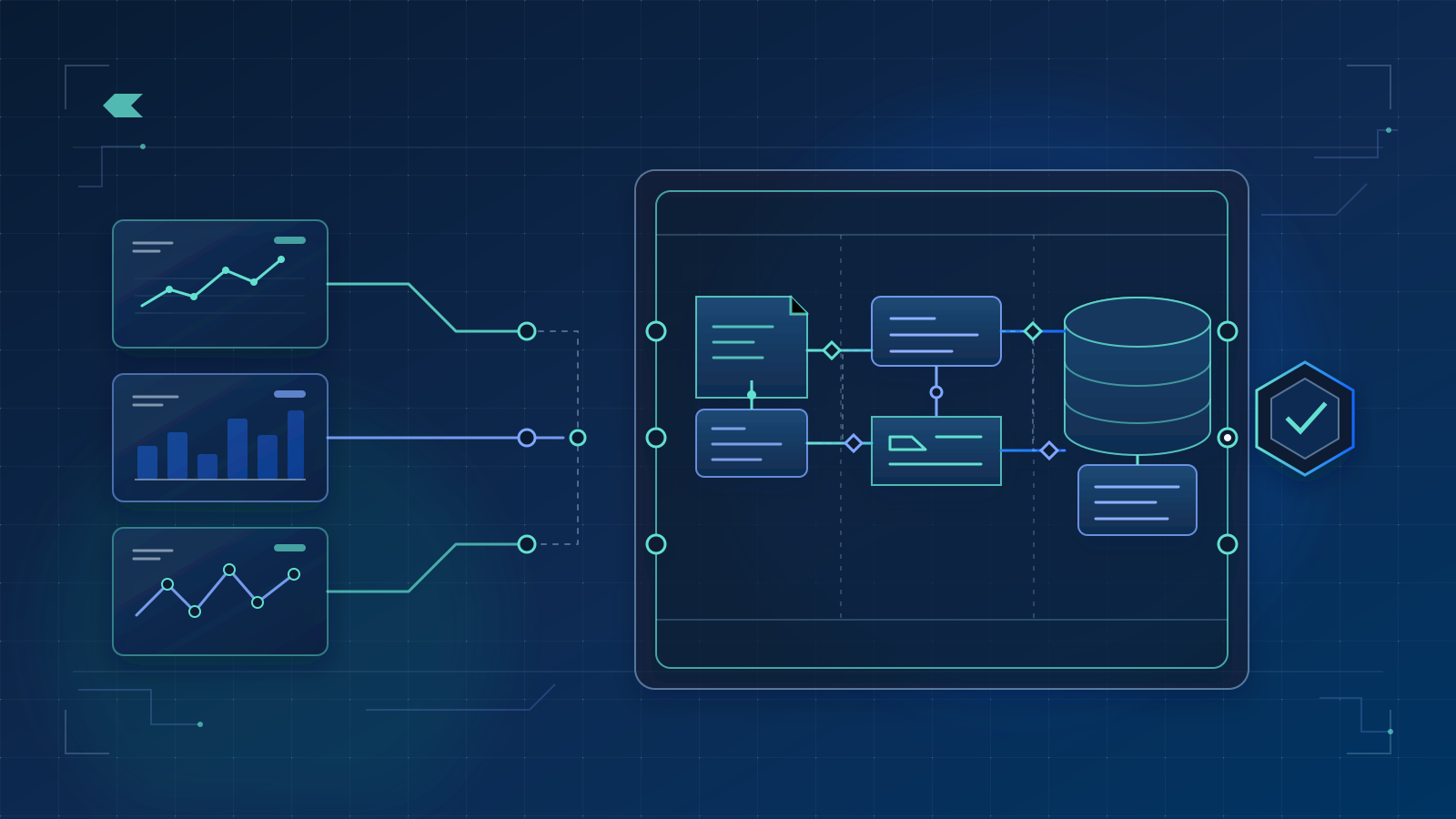
Figure 1: The AI MVP evidence loop. A user problem connects representative data, an AI model, a simple interface and a measurable outcome. Feedback from the outcome returns to the problem and informs the next test.
What Is an AI MVP?
An AI MVP, or artificial intelligence minimum viable product, is the smallest usable version of an AI-powered product that lets intended users complete one valuable task while the team measures model performance, user behaviour, operating cost and business impact. Its purpose is to test whether the product deserves further investment—not to demonstrate every feature in the long-term vision.
It must be small enough to isolate the central assumption, usable enough for a target user to finish the task, dependent on AI for core value and measurable against written criteria.
The most useful distinction is evidence. A demo may create excitement. An AI MVP must generate credible evidence from realistic use: whether the model is good enough, whether users trust the result, whether failures are manageable and whether the economics can work.
What makes an MVP specifically an AI MVP?
A normal software MVP mainly tests demand and workflow. An AI product also carries capability risk: outputs vary, performance depends on data, quality can be subjective and inference has a direct cost. Its first release therefore needs representative tests, quality thresholds, feedback, failure handling and cost visibility—not merely a screen connected to a model API. For supplementary industry discussion, Classic Informatics’ lean AI MVP framework connects data readiness, a usable interface and feedback; it is not evidence of CodeCones delivery outcomes.
What an AI MVP Is Designed to Prove
A good AI MVP should answer four connected questions.
- Desirability: Does a specific user care enough about the outcome to change behaviour or adopt the workflow?
- Feasibility: Can the selected model, data and system produce acceptable results across representative cases?
- Viability: Does the value created justify development, inference, review and support costs?
- Operability: Can the team observe errors, protect sensitive data, handle exceptions and improve the product safely?
These questions prevent teams from treating model accuracy as proof of success. An offline score creates little value if users ignore the recommendation or every useful result requires expensive expert correction.
McKinsey’s November 2025 global survey reported that 88% of respondents said their organisations regularly used AI in at least one business function, yet most remained in experimentation or pilot stages and only about one-third had begun scaling. The survey ran June 25 to July 29, 2025, with 1,993 participants in 105 nations, weighted by national GDP. These are self-reported organisational responses, not a census of all businesses or evidence of realised product value. That gap shows why early AI work must produce decision-quality evidence rather than another polished demonstration.
AI MVP vs PoC vs Prototype: The Essential Differences
A proof of concept tests whether the AI can work. A prototype tests how people should interact with it. An AI MVP tests whether a usable product creates enough real-world value to justify further investment. The artifacts can overlap, but their primary questions should remain separate. UXPin’s comparison also distinguishes feasibility, interaction and market validation; the AI-specific boundaries below are this guide’s practical synthesis.
| Dimension | AI proof of concept | AI prototype | AI MVP |
|---|---|---|---|
| Main question | Can this work? | How should this work? | Will this create enough user and business value? |
| Primary uncertainty | Technical feasibility | Experience and workflow | Adoption, outcome and viability |
| Typical audience | Technical team and sponsors | Users and stakeholders | Intended early users |
| Data | Limited but representative sample | Real or simulated | Realistic, governed or live data |
| Interface | Optional or basic | Central to the test | Functional end-to-end experience |
| Quality bar | Experimental threshold | Credible behaviour for testing | Defined acceptance threshold |
| Measurements | Accuracy, latency, feasibility | Comprehension and usability | AI, user, business, cost and safety metrics |
| Outcome | Technical go or no-go | Validated interaction direction | Invest, pivot, limit or stop decision |
| Production readiness | No | Usually no | Limited but usable and observable |

Figure 2: AI PoC, prototype and MVP. A PoC tests technical feasibility; a prototype tests the experience; an AI MVP tests real user value. These are different questions, not mandatory sequential steps.
AI proof of concept
An AI PoC is a time-boxed technical experiment. It may test defect detection, grounded retrieval or forecast accuracy using representative data. It can run in a notebook and exclude production integrations because its deliverable is feasibility evidence, not a customer-ready product.
AI prototype
An AI prototype explores the proposed experience. Users might test confidence displays, citations, corrections and escalation. It may use a real model, simulated output or human assistance because its primary purpose is learning about interaction.
AI MVP
An AI MVP joins credible capability with a functional journey. Real users complete the target task while the team observes quality, adoption, corrections, latency, cost and failures. It cannot depend on cherry-picked prompts or hidden work that invalidates the test.
Where Does an AI Pilot Fit?
A pilot is a controlled deployment used to test organisational fit. An internal assistant may prove grounded retrieval, launch as an MVP to one support group and then run across two departments with formal access, training and support.
An MVP asks whether the product delivers value. A pilot asks whether a particular organisation can adopt, govern and operate it under realistic conditions. The pilot therefore pays more attention to change management, integration ownership, compliance review, service levels and rollout risk.
When Should You Build a PoC, Prototype or AI MVP?
Start with the largest unresolved risk, not the artifact that sounds most advanced.
| Largest unanswered question | Best starting point | Evidence required |
|---|---|---|
| Can the model perform the task with our data? | PoC | Repeatable technical results against a test set |
| Is the data sufficient and usable? | PoC | Coverage, quality and access findings |
| How should users review uncertain output? | Prototype | Usability observations and preferred interaction |
| Will stakeholders understand the proposed workflow? | Prototype | Feedback on flow, roles and decisions |
| Will target users adopt a technically credible solution? | AI MVP | Behavioural usage and outcome data |
| Does the benefit justify cost and oversight? | AI MVP | Unit economics and business-impact evidence |
| Can a department operate it safely? | Pilot | Adoption, governance and support evidence |
The sequence is simple:
- Name the riskiest assumption.
- Define the evidence that would reduce uncertainty.
- Choose the smallest test capable of producing that evidence.
- Write pass, revise and stop criteria before development starts.

Figure 3: Choose the right validation stage. Technical uncertainty calls for a PoC, interaction uncertainty calls for a prototype, and adoption or value uncertainty calls for an AI MVP. Choose the smallest test that addresses the largest unresolved risk.
What Should an AI MVP Include?
One defined user and problem
“Improve customer service with AI” is too broad. “Help Tier 1 support agents draft grounded answers for billing questions” identifies a user, workflow and outcome. Narrow scope makes representative testing possible and exposes whether the proposed value is meaningful.
One end-to-end workflow
The product should take a user from realistic input to an actionable result. A disconnected model endpoint cannot reveal whether people use the output effectively.
Representative data
Data should reflect normal cases, edge cases, poor inputs and material failures. Sensitive data needs proportionate access, retention and privacy controls.
A suitable AI approach
Use the simplest approach that can test the hypothesis: a hosted model, RAG, conventional machine learning or a rules-and-AI combination. Train a custom model only when capability or differentiation demands it.
Evaluation criteria
Create a versioned evaluation set and define acceptable performance before tuning. Use task-specific metrics such as precision and recall for classification or groundedness and relevance for retrieval. Google Cloud describes this as turning subjective impressions into objective, actionable results.
Failure handling and feedback
Users need to reject, correct or escalate uncertain output. In higher-risk workflows, human approval may be part of the viable product rather than temporary scaffolding.
Product and cost instrumentation
Track completion, acceptance, corrections, latency, model version and cost per successful outcome. Without instrumentation, results and economics remain unexplained.
If these decisions are still unclear, CodeCones’ Product Discovery and MVP Validation service helps teams turn an AI opportunity into a measurable scope, validation plan and evidence-based delivery roadmap.
What Should Be Left Out of an AI MVP?
Minimum does not mean unsafe, unreliable or unusable. It means excluding work that does not help answer the primary validation question. Common exclusions include:
- Multiple loosely related use cases
- Custom model training without a demonstrated need
- Complete organisation-wide integrations
- Advanced reporting that does not affect the decision
- Infrastructure for hypothetical global scale
- Full automation of high-impact decisions
- Polished secondary workflows and role variants
- Complex agent autonomy when a bounded workflow can test the value
Security and failure handling cannot be removed when the use case requires them. NIST’s AI Risk Management Framework recommends incorporating trustworthiness throughout AI design, development, use and evaluation. Controls should match the users, data and consequences.
Six Practical AI MVP Examples
The six examples below are bounded potential applications, not delivered CodeCones engagements, case studies or proven results. They show the AI feature, initial boundary and evidence a team would need to collect; none implies a guaranteed outcome.
| Industry | Focused AI MVP | Initial boundary | Evidence of success |
|---|---|---|---|
| Customer support | Grounded reply assistant | One queue and approved knowledge base | Acceptance rate, resolution time, unsupported-answer rate |
| Healthcare operations | Referral document classifier | One document type; human confirmation required | Recall, routing time, correction rate |
| Financial services | Alert review assistant | Prioritise one low-risk alert category | Investigator time, false-positive reduction, missed cases |
| Manufacturing | Visual defect detector | One defect on one production line | Miss rate, inspection time, escalation reliability |
| B2B SaaS | Account-summary assistant | Read-only summaries from selected systems | Time saved, factual accuracy, weekly adoption |
| Retail | Product recommendation module | One category and one customer segment | Engagement, conversion lift, cost per influenced order |
These examples are deliberately constrained: no clinical automation, unrestricted financial decisions or open-internet support answers. Each boundary preserves useful learning while limiting failure consequences.
How to Measure Whether an AI MVP Is Viable
To evaluate viability in practice, use a six-layer scorecard. One aggregate accuracy number can hide weak segments, unsafe cases or poor economics.
| Measurement layer | Useful metrics | Question answered |
|---|---|---|
| AI quality | Precision, recall, groundedness, relevance | Is the output good enough for this task? |
| User outcome | Completion, time saved, successful decisions | Does it improve the workflow? |
| Trust | Acceptance, correction, override, escalation | Do users rely on it appropriately? |
| Business value | Cost reduced, throughput, conversion, risk avoided | Does the outcome justify investment? |
| Operations | Latency, availability, failure rate, cost per task | Can the product run sustainably? |
| Safety | Harmful output, policy violations, missed escalation | Are material risks controlled? |

Figure 4: Measure an AI MVP within safety boundaries. Five pillars show AI quality, user outcome, trust, business value and operational performance. The overarching safety shield represents the sixth scorecard layer: harmful output, policy violations and missed escalation must be measured across every pillar, not traded away for a better average.
Segment results by input, user group, risk and model version. A healthy average can hide poor performance for one language or document type. Review severe qualitative failures alongside dashboards.
Define the decision in advance: proceed when outcomes improve within the risk threshold; revise when corrections reveal a fixable pattern; stop when reliable performance costs more than the expected benefit.
Common AI MVP Mistakes
- Building a generic chatbot: Start with one job, user and knowledge boundary.
- Choosing the model first: Begin with the problem, workflow and outcome.
- Testing ideal examples only: Include ambiguity, poor inputs and edge cases.
- Treating a prototype as validation: Interaction alone does not prove value.
- Measuring only model quality: Connect it to user and business results.
- Ignoring inference cost: Count retries, retrieval, review and infrastructure.
- Omitting fallback: Define behaviour for low confidence and failure.
- Engineering for future scale: Validate demand before complex architecture.
For a deeper implementation view, see the existing CodeCones Article on AI MVP development scope, stack, timeline and risks.
From PoC or Prototype to AI MVP
Do not convert experimental code directly into production. Reuse evidence: evaluation cases, data findings, model comparisons, failure modes, tested flows and feedback controls.
The MVP adds authentication, permissions, governed access, logging, versioning, feedback, monitoring, fallback behaviour and repeatable deployment. Document and replace or contain experimental shortcuts.
CodeCones’ AI Product Development Services connect validation evidence with product engineering, evaluation, guardrails and scalable delivery—without assuming that every successful experiment should become a large platform.
AI MVP Readiness Checklist
Before approving development, confirm that the team can answer yes to the following questions:
- Is one target user and one valuable task clearly defined?
- Is AI necessary to the outcome rather than added for positioning?
- Are representative inputs legally and practically available?
- Is there a baseline process or result for comparison?
- Are model-quality and business-success thresholds written?
- Can users reject, correct or escalate the output?
- Is safe behaviour defined for low confidence and system failure?
- Can the team measure latency and cost per successful task?
- Are privacy, security and compliance requirements understood?
- Is there a named owner for product and model decisions?
- Will the test produce an invest, revise, pivot or stop decision?
Conclusion
An AI MVP is best understood as this: it is a narrow, usable AI product built to generate real evidence about capability, adoption, value, cost and manageable risk. A PoC proves whether an uncertain capability can work. A prototype tests how the experience should work. An AI MVP tests whether intended users obtain enough value from a functioning product to justify the next investment.
Choose the stage that addresses the largest unresolved risk, define success before building and measure user and business outcomes alongside model quality. If you need to turn an AI opportunity into a focused validation plan and production-aware MVP, contact CodeCones to discuss the workflow, evidence and engineering decisions that matter first.
Frequently Asked Questions
What is an AI MVP in simple terms?
An AI MVP is the smallest usable AI-powered product that solves one meaningful problem for real users and measures whether the model, workflow and business case perform well enough to justify further investment.
How is an AI MVP different from a normal MVP?
A normal MVP mainly tests demand and workflow. An AI MVP must also test model capability, variable output quality, data suitability, inference cost, user trust and failure handling.
What is the difference between an AI PoC and an AI MVP?
An AI PoC tests technical feasibility under controlled conditions. An AI MVP combines a credible capability with a usable workflow and tests adoption, outcomes, costs and business value with intended users.
Is a prototype the same as an AI MVP?
No. A prototype primarily tests interaction, design and workflow. It may simulate some behaviour. An AI MVP must deliver a functional core outcome and collect evidence from realistic use.
Do you need a PoC before building an AI MVP?
Not always. Use a PoC when technical feasibility or data suitability remains the biggest uncertainty. If the capability is already credible, a focused prototype or MVP may be a better first step.
How do you measure AI MVP success?
Measure model quality, user task completion, acceptance and corrections, business impact, latency, cost per successful task and safety failures. Interpret these metrics together rather than relying on accuracy alone.
When is an AI MVP ready to move toward production?
It is ready when results meet predefined thresholds, critical failure modes are controlled, users demonstrate repeatable value and the team understands the architecture, governance, operating cost and improvements required for wider deployment.
About CodeCones Editorial Team
Practical engineering guidance from CodeCones. External research is attributed inline; examples are potential applications rather than client results.
Key Takeaways
- An AI MVP tests a usable workflow and investment decision, not just a model demonstration.
- Choose a PoC for capability uncertainty, a prototype for interaction uncertainty, and an MVP for adoption and value uncertainty.
- A pilot tests organisational adoption, governance and operational fit; it can overlap an MVP.
- Include representative data, explicit thresholds, human controls, instrumentation and safe fallback.
- Use six measurement layers: AI quality, user outcome, trust, business value, operations and safety.
- Answer all eleven readiness questions and define invest, revise, pivot and stop criteria before building.
References
- [1]McKinsey & Company, The State of AI in 2025
- [2]NIST, Artificial Intelligence Risk Management Framework: Generative Artificial Intelligence Profile
- [3]Google Cloud, Define Your Evaluation Metrics
- [4]UXPin, Prototype vs MVP vs Proof of Concept: Key Differences Explained
- [5]Classic Informatics, AI MVP Development: A Lean Framework for AI Products