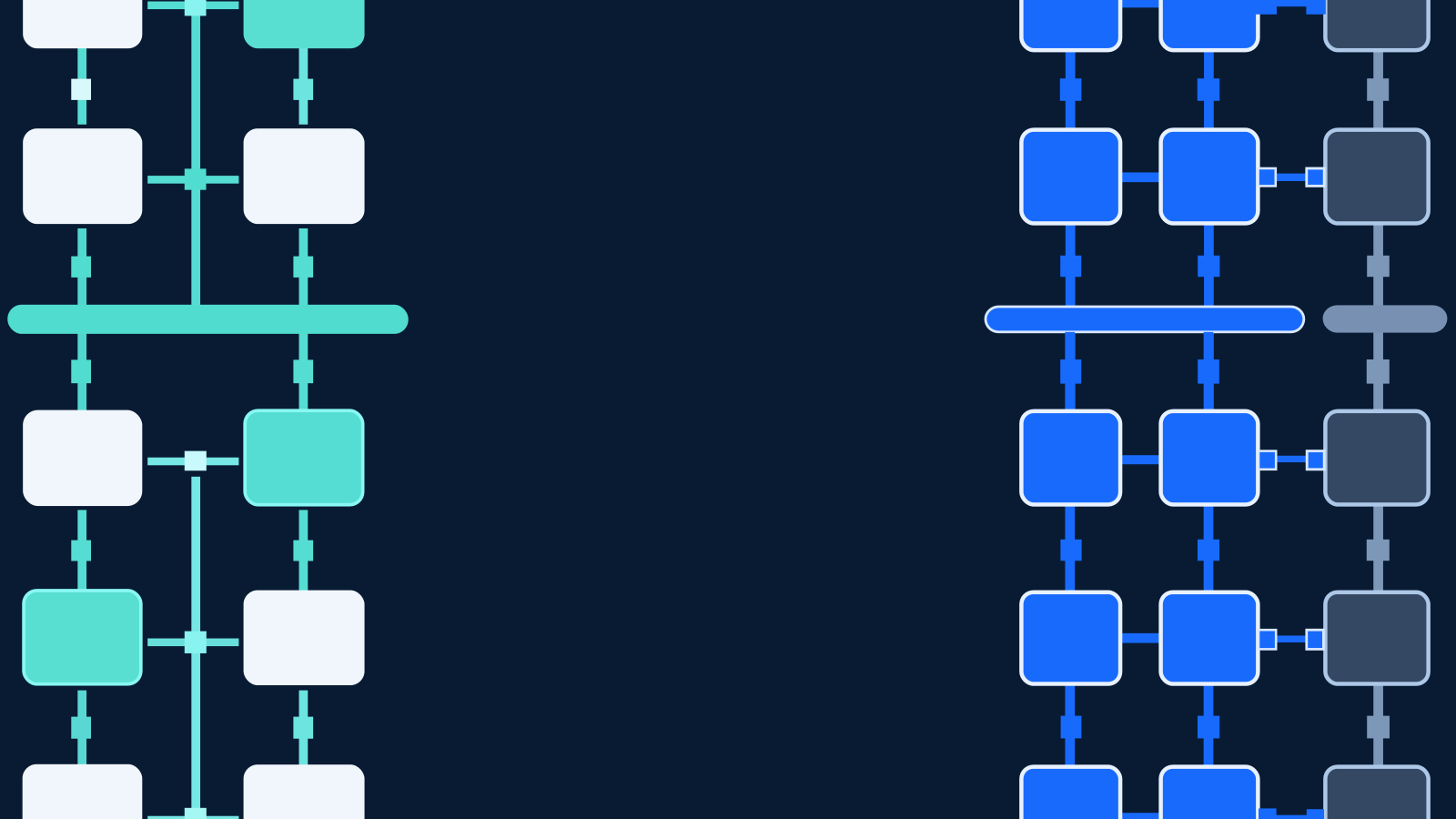

Figure 1: Choose the smallest change that removes the constraint. Refactor preserves behavior and improves structure in releasable slices. Rewrite replaces implementation and requires migration, validation, cutover and decommissioning. Compare evidence, risk and total change cost.
Rewrite vs refactor is a software modernization decision between improving an existing implementation while preserving its intended behavior and replacing some or all of it with new code. Refactoring retains working assets and changes their structure; rewriting creates a replacement that must be migrated, validated, operated, and eventually made authoritative.
Neither path is automatically safer. Refactoring can waste years when the existing design cannot support the product strategy. A rewrite can recreate old defects, miss undocumented rules, and delay customer value behind a long migration. The practical choice is the smallest change that removes the important constraint without creating unacceptable transition risk.
Teams should make the decision from evidence: product direction, system boundaries, operational data, test coverage, dependencies, compliance obligations, delivery capability, and the economics of running old and new systems together. If that assessment needs independent structure, CodeCones helps product teams connect architecture decisions to an executable modernization plan.
Rewrite vs Refactor: What Is the Difference?
Refactoring changes how software is structured without intentionally changing what users experience. Examples include separating modules, removing duplication, simplifying internal APIs while preserving external contracts, or introducing characterization tests around risky code. Replacing persistence internals can be behavior-preserving only if data semantics, transactions, consistency and observable contracts remain unchanged. Breaking an API contract, changing stored meaning or adding product behavior is redesign or migration work, not refactoring alone. The work can be small and continuous or architectural and multi-quarter.
A rewrite creates a new implementation. It may reproduce the current product, redesign selected capabilities, or replace the entire system. A rewrite usually introduces a parallel delivery stream, data migration, coexistence, cutover, and decommissioning work. The new code is only one part of the program.
| Decision area | Refactor | Rewrite | Hybrid modernization |
|---|---|---|---|
| Existing code | Preserved and improved | Replaced | Preserved or replaced by capability |
| Delivery shape | Incremental changes | Parallel build and cutover | Incremental replacement behind stable interfaces |
| Feedback speed | Usually early | Often delayed until usable parity | Early if slices reach production |
| Primary risk | Constraints remain | Hidden behavior is lost | Temporary operating complexity |
| Best fit | Valuable system with repairable structure | Small or fundamentally misaligned system | Large, critical system with separable domains |
The hybrid option matters because the real choice is rarely binary. Microsoft’s six-R modernization guidance distinguishes rehost, replatform, refactor, rebuild, retire and retain. Its broader modernization vocabulary is not a claim that every platform change is behavior-preserving refactoring. AWS’s modernization strategy, Introduction, page 1 likewise starts with the business need rather than a preferred technology.
Start With the Business Constraint
Before scoring technical health, write the problem in business terms. “The code is messy” is not a decision statement. “Enterprise onboarding takes six weeks because tenant configuration requires coordinated changes across four coupled modules” is testable.
Clarify five points:
- Outcome: What must become faster, safer, cheaper, or newly possible?
- Deadline: Is there a regulatory date, contract, market window, or support deadline?
- Continuity: How much outage, degraded service, or operational disruption is acceptable?
- Scope: Which customer journeys and business capabilities are actually constrained?
- Proof: Which metrics will show that modernization worked?
This framing may reveal a smaller intervention. A slow release process could need CI/CD improvements rather than application replacement. A scaling problem may sit in one database query or synchronous integration. A product limitation may require a new bounded service while the rest of the platform remains stable.
Gather Evidence Before You Choose
A credible rewrite vs refactor assessment combines repository analysis with production evidence and stakeholder knowledge. Run a short discovery phase before approving a large program.
Product and domain evidence
- Map the highest-value customer journeys and revenue-critical capabilities.
- Identify rules that exist only in code, support playbooks, or employee memory.
- Separate required behavior from obsolete behavior and accidental complexity.
- Record roadmap capabilities the current design cannot support.
Engineering evidence
- Dependency graph, module coupling, cyclic dependencies, and change hotspots.
- Test coverage around critical behavior, not only an overall percentage.
- Build time, lead time for change, deployment frequency, and failed-change recovery.
- Defect concentration, security findings, unsupported libraries, and skill availability.
Operational evidence
- Availability, latency, capacity, incident history, recovery performance, and manual work.
- Data ownership, lineage, retention, reconciliation, and migration constraints.
- External APIs, vendor contracts, batch jobs, devices, and downstream consumers.
- Audit, privacy, residency, accessibility, and regulated validation requirements.
DORA’s current software delivery metrics guide, updated January 5, 2026, defines change lead time, deployment frequency, failed deployment recovery time, change fail rate and deployment rework rate. Track reliability separately against service-level objectives; it is not the fifth delivery metric in this model. Failed deployment recovery time concerns a failed deployment requiring intervention, not recovery from every incident. DORA’s 2023 Accelerate State of DevOps Report, in its code-review and contextualization discussions, associates faster reviews with higher delivery performance but warns that improving an already-fast review process will not fix a bottleneck elsewhere. That historical association is not a promised improvement or evidence for a rewrite. Establish application-level baselines, inspect review wait time and batch size where relevant, and use measures to learn rather than as targets teams can game.
A Weighted Rewrite vs Refactor Decision Scorecard

Figure 2: Replacement need and execution readiness are separate. Replacement-need weights: strategic fit 35%, changeability 25%, reliability and security 25%, platform viability 15%. Score each from 1 to 5. Domain knowledge, migration complexity, delivery capacity and deadlines are separate readiness gates, never added to this score.
Separate two questions: Does this capability need replacement? and Can we execute that replacement safely? The weighted assessment below addresses replacement need only. Domain knowledge, migration complexity, delivery capability and time pressure are not replacement-need points; they are readiness gates assessed separately.
Score the four need criteria from 1 to 5. A 1 means little evidence of a structural replacement need; a 5 means strong evidence that incremental repair cannot remove the constraint economically. Use 2 for a mostly local, repairable constraint; 3 for a material but potentially repairable constraint; and 4 for a broad constraint where repair appears unlikely to suffice. Anchor every rating in observed evidence, record uncertainty and do not turn missing evidence into a 5. Leave the assessment incomplete until discovery resolves material unknowns.
Replacement-need score = (35 × strategic fit + 25 × changeability + 25 × reliability and security + 15 × platform viability) / 100. The result ranges from 1 to 5. Higher always means stronger replacement need, never greater migration risk. These suggested weights total 100% and are an editorial discussion aid, not a validated predictive model. Agree weights before rating, explain any change and test whether plausible alternative weights change the conclusion.
| Criterion | Weight | Score 1 means | Score 5 means |
|---|---|---|---|
| Strategic fit | 35% | Architecture supports the roadmap | Core design blocks the product strategy |
| Changeability | 25% | Local changes are predictable | Small changes create broad regressions |
| Reliability and security | 25% | Risks are understood and controllable | Systemic risks cannot be isolated |
| Platform viability | 15% | Supported stack and available skills | Unsupported platform with no viable in-place support path |
For example, ratings of 4, 3, 2 and 4 produce (140 + 75 + 50 + 60) / 100 = 3.25. This is an illustrative calculation, not a recommended rewrite threshold or a measured client result. There are no validated low, middle or high cutoffs here. Inspect the individual findings, compare refactor, replacement and hybrid costs, and test the preferred option with a representative pilot. A severe security obligation cannot be averaged away by otherwise favorable scores.
Execution readiness gates, not rewrite signals
- Domain knowledge: Hidden business rules require recovery through characterization tests, telemetry, user interviews and a must-preserve/change/retire parity register. Missing knowledge makes replacement less ready, not more necessary.
- Migration complexity: Stateful data, regulation and deep integrations require reconciled migration rehearsals, explicit authority, retention controls and recovery evidence. Complexity can constrain or rule out the proposed cutover; it never increases the need score.
- Delivery capability: Fund named owners, relevant skills, operational support and capacity for coexistence and retirement. Weak delivery capacity means reduce scope, build capability or defer; it does not favor a rewrite.
- Time pressure: A deadline does not inherently favor replacement. Compare the earliest safe route to the required outcome, including interim containment, supported upgrades, reduced scope or a bounded replacement. If no option meets the date safely, escalate the trade-off rather than forcing a rewrite.
Strong replacement need with failed readiness gates means address the gaps or constrain the plan before committing. Weak replacement need with excellent migration skills still does not justify replacement. A hybrid is an option when seams, costs and operating evidence support it, not an automatic answer for a middle score.
For an independent technology consulting assessment of architecture, dependencies and modernization options, CodeCones can structure the evidence through its technology advisory process and turn the recommendation into sequenced decisions.
Calculate Total Change Cost, Not Development Cost
The cheapest code estimate is not necessarily the cheapest decision. Compare options over a defined horizon, such as three years, using the same cost categories.
Total change cost = build work + transition work + duplicated operations + migration and assurance + opportunity cost + residual risk.
For refactoring, include slower delivery while engineers improve structure, temporary compatibility layers, expanded tests, and constraints that will remain. For rewriting, include product discovery, behavior recovery, dual maintenance, data migration, security review, performance testing, training, cutover, rollback readiness, and decommissioning.
Model ranges rather than a single optimistic number. Include a base case, adverse case, and failure case. The failure case is especially important: what is the cost if the new system reaches 80 percent parity but cannot safely replace the old one?
When Refactoring Is the Better Choice
Choose refactoring when the product delivers value, the core architecture can evolve, and problems are concentrated in identifiable areas. It is also preferable when continuity requirements make a long parallel rebuild dangerous.
Strong refactoring signals include:
- customer behavior and business rules are complex but valuable;
- critical flows have usable automated tests or can be characterized;
- defects and delays cluster in a few hotspots;
- interfaces can be stabilized around modules;
- the current platform remains supported;
- teams need benefits within weeks, not after full parity;
- production changes can be released and observed safely.
Refactoring should be outcome-led. “Improve code quality” is too vague. Set a measurable delivery, reliability, or ownership objective.
When a Rewrite Is Justified
A rewrite is justified when the system’s fundamental assumptions conflict with what the business must become and incremental repair cannot close the gap at acceptable cost. This may occur when a single-tenant design must become a governed multi-tenant platform, an offline desktop product must become a real-time service, or an unsupported runtime creates an immovable security exposure. These are investigation triggers, not automatic rewrite decisions: test tenant-isolation seams, service adapters, supported upgrades and containment first.
A credible rewrite case requires both replacement-need evidence and execution prerequisites. In the checklist below, architectural conflict, platform viability and obsolete product scope concern need; small scope concerns economics and testability; understood behavior, safe migration and funded coexistence concern readiness. Readiness makes an otherwise justified replacement executable; it does not create the reason to replace.
- the required operating model contradicts the existing architecture;
- the application is small enough to re-specify and validate completely;
- current behavior is well understood through tests, telemetry, and users;
- technology support or talent availability has become a material risk;
- data and integrations can be migrated and reconciled safely;
- a new product direction makes much of the old scope unnecessary;
- leadership will fund coexistence, cutover, and decommissioning, not just coding.
Do not justify replacement only because a modern framework is attractive. Technology ages. The target architecture should be chosen for business capabilities, quality attributes, operability, team ownership, and change patterns.
The Hybrid Path Is Often the Practical Answer

Figure 3: The hybrid path, when seams and coexistence are feasible. Stabilize tests, telemetry and rollback; create an API, event or routing seam; replace a production-ready slice; shift traffic by cohort or canary and reconcile; delete legacy code, data copies, access and cost.
For large production systems, rewrite vs refactor is best resolved capability by capability. Refactor enough to create seams, then replace selected domains behind stable contracts. Retire obsolete functions instead of rebuilding them.
The Strangler Fig pattern routes traffic between old and new implementations while capabilities move incrementally. Microsoft’s Strangler Fig guidance describes customers continuing through the same interface while functionality is replaced behind a façade. The façade must not become a bottleneck or single point of failure; the pattern may not fit when requests cannot be intercepted or rapid full retirement is mandatory. Martin Fowler’s Strangler Fig discussion explains the case for smaller changes, earlier value and feedback. Patterns of Legacy Displacement, by Ian Cartwright, Rob Horn and James Lewis, connects desired outcomes, smaller parts, incremental delivery and organizational change. These are practitioner patterns, not quantified guarantees of lower risk.
A practical sequence is:
- Stabilize observability, deployment, backups, and critical tests.
- Map business capabilities, ownership, data, and dependencies.
- Introduce an API, event, or routing seam around one bounded capability.
- Build the replacement slice with production controls.
- Migrate a limited cohort or traffic percentage.
- Compare outputs, reconcile data, and measure user outcomes.
- Expand traffic only when exit criteria are met.
- Remove old paths, data copies, infrastructure, and permissions.
The hard part is not starting the new component. It is finishing the displacement and deleting the legacy path.
How to Run a Safe Rewrite
Treat a rewrite as a migration program, not a greenfield coding project. Start with the smallest end-to-end slice that proves architecture, data movement, deployment, support, and customer experience together.
Use contract tests for integrations and reconciliation controls for data. Decide whether records will be backfilled, transformed on access, synchronized temporarily, or migrated by cohort. Every approach needs an authoritative source during coexistence.
Maintain a parity register with three categories: must preserve, intentionally change, and retire. This prevents undocumented behavior from returning as late scope while also stopping the team from rebuilding features nobody needs.
Release through feature flags, routing rules, canaries, or customer cohorts. Define rollback time, acceptable data divergence, performance thresholds, security gates, and support procedures before moving traffic. If CodeCones is asked to support delivery, discuss the managed product engineering engagement model and agree scope, ownership, quality, cloud delivery, observability and handover explicitly. This is an engagement option, not evidence of a delivered client result or a performance promise.
Decision Gates That Prevent Endless Programs

Figure 4: Five gates keep modernization accountable. Discovery establishes baseline evidence and may stop or fund a pilot. Pilot proves the path. Scale requires explicit exit criteria. Cutover shifts authority with tested recovery. Decommission removes the old system only after consumers and retention obligations are resolved.
Create explicit gates instead of one irreversible approval.
| Gate | Evidence required | Decision |
|---|---|---|
| Discovery | Business constraint, current metrics, capability map | Stop, investigate, or fund a pilot |
| Pilot | One production slice, cost range, operational proof | Refactor, replace, or revise architecture |
| Scale | Stable metrics, migration capacity, support readiness | Expand by domain or cohort |
| Cutover | Reconciliation, performance, security, rollback test | Shift authoritative traffic and data |
| Decommission | No required consumers, retention met, recovery archived | Remove old code, access, and infrastructure |
At each gate, test the original assumption. If a new service is not easier to change, more reliable, or cheaper to operate, expanding it will multiply the problem.
How to Measure Success
Measure whether the system became easier and safer to change, not how much code was replaced. Use a balanced set of product, delivery, operational, and financial indicators.
- Product: task completion, conversion, customer effort, adoption, and support contacts.
- Delivery: change lead time, deployment frequency, change fail rate, failed deployment recovery time and deployment rework rate, using the definitions above.
- Quality: escaped defects, regression rate, security findings, and test effectiveness.
- Operations: availability, latency, capacity, toil, incident frequency, and recovery objectives.
- Architecture: independent deployability, dependency count, change coupling, and ownership clarity.
- Economics: cost per transaction, platform spend, licensing, maintenance effort, and avoided risk.
Compare the metrics by capability and release cohort. Platform-wide averages can hide a failing migration slice. Establish the baseline before work begins and set review points at 30, 60, and 90 days after each production move.
Industry Considerations
In healthcare, financial services, and the public sector, traceability, validation, retention, and audit evidence may make incremental replacement safer than a single cutover. In SaaS, tenant isolation, entitlements, billing, and backward-compatible APIs often determine migration order. In retail, seasonality can create blackout periods. In manufacturing and IoT, devices and plant integrations may remain in service for years, so protocol compatibility matters as much as application code.
The separation of replacement need from readiness stays consistent. Agree need weights for the actual business constraint; continuity, reconciliation and legal obligations remain non-negotiable readiness gates, not extra points favoring replacement. A small internal tool may be economical to replace if its required behavior can be fully characterized and validated and its blast radius is demonstrably limited. Small scope alone does not establish that domain knowledge is easy to recover.
Conclusion
The right modernization decision is not the one with the cleanest architecture diagram. It is the option that removes the most important business constraint with a controlled level of transition risk. Refactor when valuable behavior and architecture can be improved incrementally. Rewrite when foundational assumptions block the strategy and the organization can prove, migrate, operate, and retire the replacement. Use a hybrid path when capabilities can move independently.
Make the rewrite vs refactor choice through evidence, total change cost, a production pilot, and explicit gates. Keep options reversible where feasible until the new path proves itself. Data transformations and external side effects may not be reversible: define a safe forward-recovery plan when rollback cannot restore the prior state. If your team needs a defensible modernization assessment and delivery roadmap, contact CodeCones to review the system, risks, and practical next step.
Frequently Asked Questions
Rewrite vs Refactor: Which Is Better for Legacy Software?
Refactor when the system still delivers business value, its architecture can evolve, and risks are concentrated in specific areas. Rewrite when fundamental assumptions conflict with the required product or operating model and incremental change cannot close the gap economically. Large critical systems often need a hybrid, capability-by-capability approach.
How do you decide between a rewrite and a refactor?
Define the business constraint, collect product and production evidence, score strategic fit and technical health, model total change cost, and test the preferred option with a thin production slice. Include migration complexity, team capacity, continuity, security, data, and decommissioning in the decision.
What is the biggest risk of a software rewrite?
The biggest risk is losing behavior that users and operations depend on but that was never documented. Teams reduce this risk with characterization tests, telemetry, domain workshops, a parity register, incremental traffic migration, data reconciliation, and tested rollback.
Can a system be partly rewritten and partly refactored?
Yes. Most mature systems benefit from selective modernization. Teams can refactor stable areas, replace constrained domains, replatform infrastructure, and retire obsolete features. Stable interfaces and clear data ownership allow these approaches to coexist during transition.
What is the Strangler Fig pattern?
It is an incremental modernization pattern in which a façade routes requests to old or new implementations while capabilities are replaced gradually. Users can keep the same entry point, and teams can release, measure, and roll back smaller migration slices instead of making one big-bang cutover.
How long does a rewrite or refactor take?
There is no reliable universal duration. Scope, domain complexity, tests, data, integrations, compliance, team capacity, and release constraints determine the timeline. Estimate by production-ready capability, include coexistence and decommissioning, and update the forecast after a representative pilot.
Should technical debt determine the decision?
Technical debt is one input, not the verdict. Prioritize debt that increases incident risk, delays valuable changes, raises security exposure, or blocks strategy. Code that looks old but changes rarely and operates reliably may not justify replacement.
About CodeCones Editorial Team
Practical engineering guidance from CodeCones. External sources are attributed inline; the scorecard is a discussion aid, not a validated model or a claim of client results.
Key Takeaways
- Choose the smallest change that removes a demonstrated business constraint.
- Refactoring preserves behavior; breaking contracts or changing product behavior needs separate redesign and migration decisions.
- Score replacement need separately from domain knowledge, migration complexity, delivery capacity and deadlines.
- The suggested 1–5 weighted score has no validated rewrite thresholds; record evidence and test assumptions.
- Compare total change cost, including coexistence, assurance, recovery and retirement.
- Use representative pilots, explicit authority, reconciliation and five decision gates before expanding.
References
- [1]Microsoft, The 6 Rs of application modernization
- [2]Microsoft Azure Architecture Center, Strangler Fig pattern
- [3]AWS Prescriptive Guidance, Strategy for modernizing applications
- [4]Martin Fowler, Strangler Fig Application
- [5]Ian Cartwright, Rob Horn and James Lewis, Patterns of Legacy Displacement (on martinfowler.com)
- [6]DORA, Software delivery performance metrics
- [7]DORA, Accelerate State of DevOps Report 2023 (code reviews and contextualization)


