Omnichannel retailers
Connecting digital, store, inventory and service experiences.
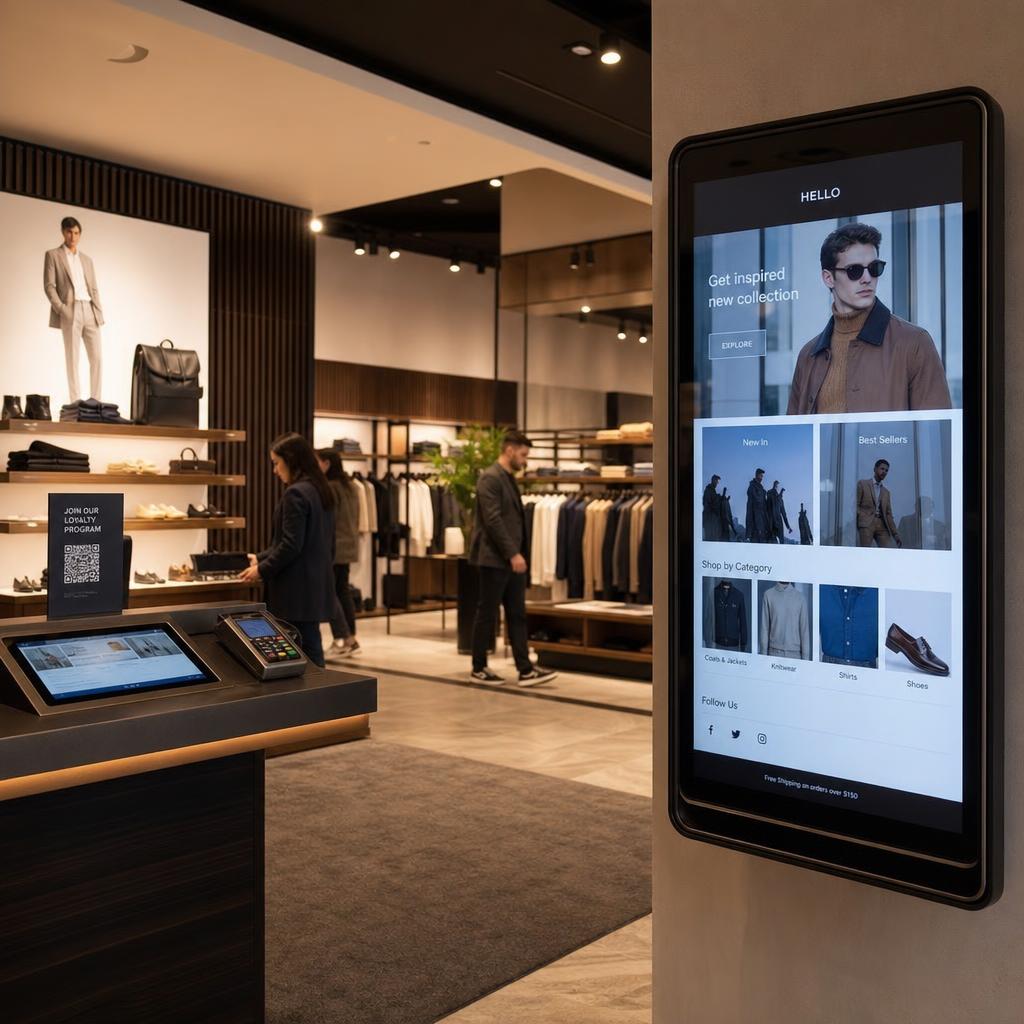
CodeCones designs and builds retail and e-commerce AI products, connected data platforms and workflow automation for retailers, marketplaces, DTC brands and commerce technology companies. We integrate personalization, product discovery, forecasting, inventory and customer operations with existing commerce, CRM, order, warehouse and data systems.
McKinsey reports these potential outcomes for AI-driven personalization across multiple industries in research published in November 2025. They are third-party estimates, not CodeCones client outcomes or performance guarantees, and do not apply equally to every retail workflow.
potential improvement in customer satisfaction from AI-driven personalization
McKinsey:Agents for Growthpotential reduction in cost to serve from AI-driven personalization
McKinsey:Agents for GrowthConnecting digital, store, inventory and service experiences.
Improving product discovery, personalization and post-purchase operations.
Coordinating catalog quality, seller content, search relevance and customer workflows.
Forecasting demand at product and location level.
Embedding governed AI capabilities into products and platforms.
The problems organizations in this sector bring to us most consistently.
For seasonal capacity decisions that must preserve latency and availability, explore how to control cloud cost during demand peaks.
The challenge
Customer, product, inventory, transaction and service data are distributed across commerce, CRM, marketing and operational platforms. Consistent personalization across channels requires connecting these sources into a usable data foundation.
McKinsey reports that AI-driven personalization can improve customer satisfaction by 15% to 20%, increase revenue by 5% to 8%, and reduce cost to serve by up to 30%. The research was published in November 2025 and concerns AI-driven personalization across multiple industries.
McKinsey and Company, 2025These are third-party research estimates across multiple industries and are not CodeCones customer results or guaranteed outcomes.
What we engineer
Production retail AI depends on reliable customer, product, order, inventory and service data. CodeCones works through supported APIs, events and client-approved interfaces across commerce, CRM, order management, warehouse management, product information and data platforms. Discovery confirms system constraints, ownership, identity rules, freshness, lineage and operating responsibilities before architecture is committed.
Customer and identity resolution using client-approved identifiers and consent boundaries.
Product, catalog, inventory, order and interaction data ingestion and quality controls.
Batch and real-time pipelines selected around the workflow’s freshness requirements.
Evaluation datasets, feature pipelines, deployment and model/version management.
Observability, incident handling and rollback paths for production services.
Service Pathways
Our AI solutions for retail connect customer-facing decisions to the data, evaluation controls and operational workflows needed to run them in production.
Apply agentic AI to connected commerce workflows where approved actions, routing and escalation can be bounded by clear rules and human oversight.
Common applications
Build the customer, product and transaction data platform that personalization and forecasting models depend on. Our data engineering and MLOps services include identity resolution, feature engineering, model deployment and continuous monitoring.
Common applications
Use our AI product development services to build personalization, product discovery, demand forecasting and inventory-support capabilities integrated into existing commerce workflows, with real-time serving and evaluation controls.
Common applications
Use data analytics services to define forecasting, recommendation and inventory baselines, evaluation measures and decision-support reporting before production changes are approved.
Common applications
Use cloud platform engineering services to support personalization and commerce AI at e-commerce scale, including peak traffic events, monitored serving and safe fallback behavior.
Common applications
Technology
A curated set of platforms and tools relevant to this industry's data and AI requirements.
Technology selection is guided by project requirements, existing environments, and client preferences. This list is not exhaustive.
Governance
Retail AI systems handle customer behavioral data and pricing decisions that require explicit consent boundaries, evaluation, monitoring and accountable human oversight.
Define which customer, behavioral and transaction signals may be used for each model and channel. Enforce client-defined consent, purpose, retention and access boundaries in data and serving workflows.
Evaluate segment performance, exclusion patterns and unintended outcomes. Consequential pricing or eligibility decisions require documented rules, accountable review and appropriate human approval.
Measure relevance, coverage, diversity, forecast error, customer impact and operational outcomes against defined baselines. Use controlled experiments only where the client approves the design and risk.
Monitor data quality, freshness, model quality, latency, cost, overrides and failure modes. Define safe fallback, incident and rollback behavior before production release.
Engagement Models
Retail AI consulting services can begin with discovery, a defined build or embedded specialists, then extend into production support where that operating scope is included.
Assess the commerce workflow, data readiness, system constraints, decision ownership, risk boundaries and measurable acceptance criteria before selecting a model or architecture.
Start discoveryDeliver a scoped retail AI product, connected data foundation or workflow automation initiative from architecture through integration, evaluation, deployment and handover.
Discuss a projectAdd senior AI, data, backend, platform or frontend engineers to an established commerce roadmap, codebase and operating process.
Explore engagement modelsOperate monitored systems through defined support, incident, evaluation, experimentation and release processes where included in the engagement.
Discuss production supportIllustrative engagement
A retailer manages customer, product, inventory, order and service data across separate systems. Recommendation and forecasting initiatives cannot move reliably from analysis into customer and operational workflows.
Connect approved sources, resolve customer and product entities, build evaluation-ready datasets, deploy the selected model or workflow, integrate decisions with operational systems, route exceptions for review, and monitor quality and reliability.
Recommendation relevance and coverage, forecast error by segment, stockout and overstock indicators, latency, customer-service handling time, override rate, availability and incident frequency. These are measurement categories, not promised outcomes.
This is a representative delivery pattern, not a published client result. Replace it only with approved first-party evidence.
Get in Touch
Tell us about your challenge with data, personalization or platform engineering. We respond within one business day.
FAQs
More Industries
Where data latency costs patient outcomes.
Compliance at speed, without the manual overhead.
Ship AI-enabled products with engineering discipline.
Predict failure before the line goes down.
Turn disruption into loyalty with smarter operations.
Where building data becomes operational intelligence.
Tell us which commerce workflow, data integration or customer/operational bottleneck you want to improve. We will help assess the data, systems, decision boundaries and practical path to a production-ready solution.