CI/CD Automation and DevOps Release Engineering Services
CodeCones helps engineering teams replace slow, manual release processes with reliable CI/CD pipelines, automated quality and security checks, progressive delivery controls, and measurable software delivery performance. We assess the current release path, standardize reusable workflows, implement deployment safety mechanisms, and help teams operate the new delivery system across services and environments.
Representative solution blueprint
This page presents a representative delivery approach, not the outcome of a named client engagement. Pipeline scope, tool choices, automation coverage, deployment controls and improvement targets are established only after reviewing the current software architecture, environments, test evidence, operational risk and team responsibilities.
The Problem
When Every Production Release Becomes a High-Risk Event
Release performance breaks down when build, test, approval and deployment steps vary across repositories or depend on tribal knowledge. Features wait for shared release windows, teams repeat manual checks, and recovery decisions begin only after users are affected. A useful CI/CD automation program makes the release path repeatable, observable and governed without forcing every workload into the same deployment pattern.
Release cycles take weeks or months while the business needs smaller, more frequent changes.
Deployments depend on manual coordination, checklists or a small number of release owners.
Slow or flaky tests prevent teams from trusting the pipeline.
Multiple teams compete for shared pipelines, environments or release windows.
Failed deployments take too long to detect, diagnose or recover from.
Security or compliance evidence is assembled manually after the change.
Teams cannot define or calculate software-delivery metrics consistently.
Pipeline implementations drift across repositories and toolchains.
How we approach it
The stages through which a solution in this space is typically delivered.
Baseline the Release Path and Delivery Data
Service Coverage
From Release Assessment to CI/CD Implementation
CodeCones combines CI/CD consulting services with implementation support. Advisory work establishes the baseline, target pipeline architecture, control model, metric definitions and pilot roadmap. Embedded specialists work inside the client toolchain and repositories to build templates, migrate pipelines, improve tests and telemetry, and transfer ownership. A managed engagement can take delivery responsibility for an approved program; 24/7 operations are included only when explicitly verified in scope. Explore Cloud & DevOps services, embedded DevOps and platform specialists and Browse all solutions.
Cloud DevOps and Platform
Cloud DevOps engineering provides the infrastructure, deployment pipelines, and observability foundation the solution runs on.
- Cloud infrastructure design and provisioning
- CI/CD pipeline engineering and deployment automation
- Observability, alerting, and reliability engineering
Managed Product Engineering
Managed Product Engineering takes end-to-end delivery ownership — architecture, build, test, and release — aligned to a defined outcome.
- End-to-end delivery ownership from design to production
- Cross-functional squads aligned to business outcomes
- Ongoing engineering and product management
Technologies
Technologies involved
Specific tools are selected based on your architecture, existing platforms, and engineering requirements.
CI/CD platforms
Source control and code review tooling
Feature flag management
Infrastructure-as-code
Observability and alerting
Pipeline architecture and implementation
Reusable workflows, pipeline-as-code, artifacts, promotion rules and environment standards.
Automated quality
Risk-tiered unit, integration, contract and end-to-end checks with explicit flaky-test handling.
DevSecOps controls
Code, dependency, secrets and policy checks with traceable exceptions and evidence.
Progressive delivery
Feature flags, rolling, canary and blue-green patterns selected for the workload.
Recovery engineering
Deployment verification, pause, rollback, roll-forward and controlled break-glass procedures.
Measurement and enablement
DORA definitions, pipeline-health telemetry, dashboards, runbooks and ownership transfer.
Pipeline Control and Evidence Matrix
Use risk-based gates rather than forcing every repository or workload through identical controls.
| Stage | Automated control | Evidence | Exception / recovery |
|---|---|---|---|
| Commit / PR | Review, branch protection and required checks | Linked change, identity and test results | Approved, scoped break-glass |
| Build | Reproducible build, dependency lock and artifact ID | Immutable artifact and provenance where appropriate | Rebuild or quarantine |
| Test | Risk-tiered unit, integration, contract and E2E checks | Results, coverage trend and flaky-test status | Documented risk acceptance |
| Security | SAST, SCA, secrets, license and policy gates | Scan result, SBOM/provenance when applicable | Time-bound exception with owner |
| Promotion | Environment and approval rules | Artifact, configuration, approver and timestamp | Pause or rollback |
| Deployment | Rolling, canary, blue-green or feature flag | Health, latency, errors and SLO signal | Rollback or roll-forward decision |
| Post-deploy | Verification and telemetry | Outcome, incident and change record | Incident/recovery review |
Choose a Deployment Pattern for the Workload
There is no universal best deployment strategy.
| Pattern | Best fit | Advantage | Constraint |
|---|---|---|---|
| Feature flags | Decouple deployment from user release | Fine-grained exposure and fast disablement | Flag lifecycle, authorization and stale-code risk |
| Canary | Gradual exposure to representative traffic | Limits blast radius while validating production behavior | Requires strong telemetry and meaningful traffic |
| Blue-green | Fast environment switch and switchback | Clear cutover and rapid reversal | Extra capacity and data-compatibility planning |
| Rolling | Common stateless workloads | Capacity-efficient incremental replacement | Mixed-version compatibility required |
| Recreate | Simple noncritical or downtime-tolerant workloads | Operational simplicity | Downtime; unsuitable for critical services |
Outcomes
KPIs to Baseline and Improve
Agree definitions and a baseline before setting targets. Apply software-delivery metrics to an application or service in context; use them to improve the system, not to rank unrelated teams. These are metrics to define, baseline and improve—not CodeCones client results.
Deployment frequency
Change lead time
Failed deployment recovery time
Change failure rate
Deployment rework rate
Pipeline health
Adoption
Deployment frequency
Deployments over a period or time between deployments for one application or service
Change lead time
Time from commit in version control to production deployment
Failed deployment recovery time
Time to recover from a failed deployment requiring immediate intervention
Change fail rate
Share of deployments requiring immediate intervention, rollback or hotfix
Deployment rework rate
Share of unplanned deployments made because of a production incident
Pipeline health
Success rate, queue time, median/p95 duration, flaky-test rate and manual touchpoints
Adoption
Percentage of deployments using the approved pipeline and exception process
Engagement
How we engage
This solution is available through the following engagement models.
Embedded Engineering Specialists
Work inside approved repositories and toolchains to implement templates, migrations, testing, observability and ownership transfer.
Advisory and Optimization
Baseline, roadmap, standards, control model, metric definitions and pilot decisions.
Managed Product Engineering
Delivery ownership for an approved automation program; 24/7 operations are included only when explicitly verified in scope.
What a CI/CD and Release Automation Assessment Produces
- Current-state release-path and value-stream map.
- Prioritized pipeline gap and delivery-risk register.
- Target pipeline and promotion reference architecture.
- Stage-by-stage control and evidence matrix.
- Pilot repository, scope and migration plan.
- DORA and pipeline-health definitions, data sources and ownership.
- Rollout, adoption, runbook and responsibility plan.
Governance
Controls & governance
Operational controls built into or recommended alongside this solution.
Required Pipeline Controls
Use risk-based gates with a named owner and traceable result. Do not permit silent bypass or force identical controls on every workload.
Controlled Break-Glass Procedure
Record identity, reason, scope, approval, expiry and outcome for an emergency exception, then review it after the event.
Deployment Verification and Recovery
Use agreed health signals and thresholds to pause, roll back or roll forward. Preserve human judgment for ambiguous or stateful failures.
Release Evidence and Audit Trail
Link the change, artifact, approvals, test and security results, deployment event and observed outcome.
Related
Related solutions

Technology & SaaS +1
Multi-Tenant SaaS Modernization
A tightly coupled application, shared data model and coordinated release process can make every enterprise requirement expensive.
Technology & SaaS +3
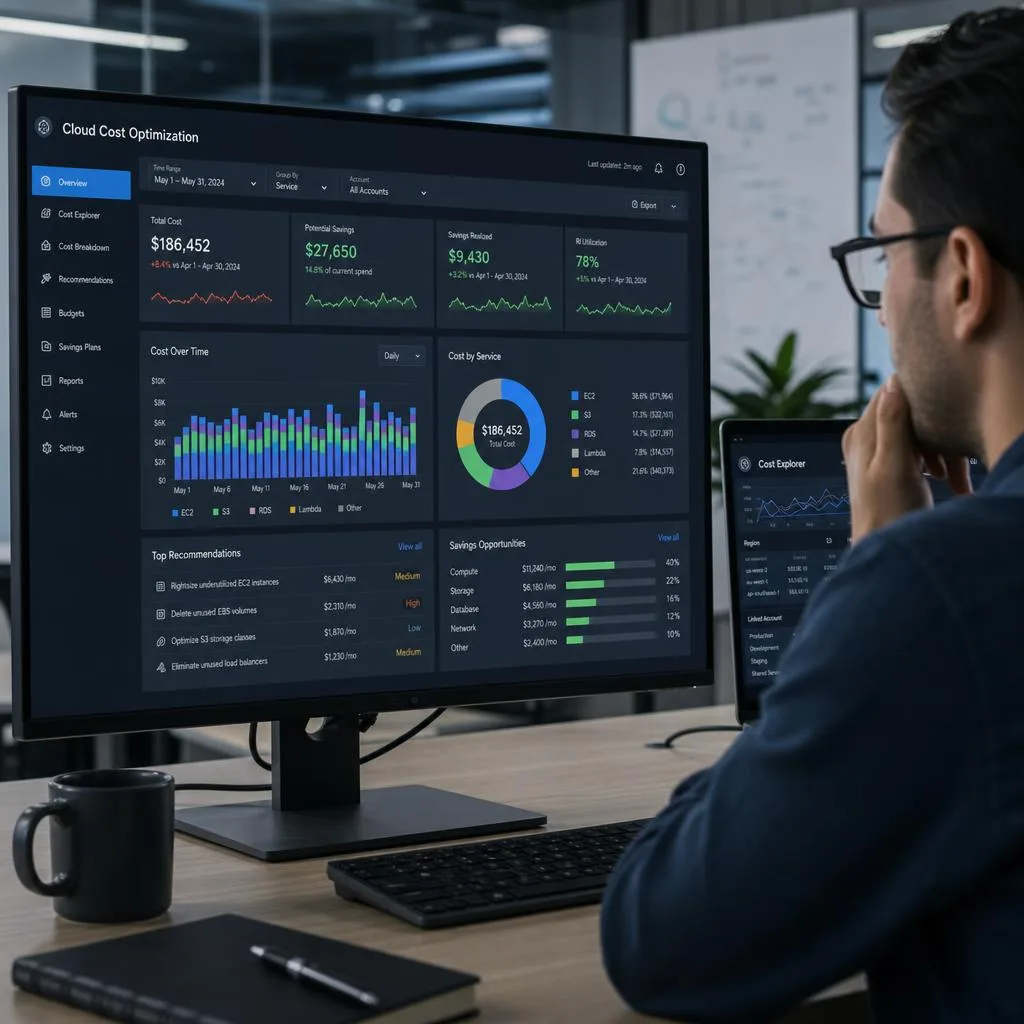
Cloud Cost and Reliability Optimization
Cloud growth becomes difficult to govern when finance sees one aggregated bill while engineering sees hundreds of resources and services.

Technology & SaaS +3
Product Discovery and MVP Validation Services
A polished prototype can still solve the wrong problem, and a technically sound MVP can still lack buyer demand.
Discuss This Solution
Talk to us about DevOps and Release Automation
We can walk you through this blueprint and map it to your specific challenge.
- Dedicated project manager from day one
- Fixed-scope or continuous engagement options
- Full IP ownership: all deliverables are yours
- Response within one business day
Start with a CI/CD and Release Automation Assessment
Bring one representative repository, the current pipeline definition, an environment map, recent release or incident examples, and any delivery or compliance constraints. CodeCones will identify the first automation, control and measurement decisions, then outline a prioritized pilot scope.
Need a planning budget first? Get a Budget Estimate