Dedicated SaaS Development Pod
Series A and Series B SaaS companies reaching scale face a common engineering constraint: the founding team's velocity has slowed as the codebase matured, and recruiting in-house has a 3–6 month time-to-productivity lag that the roadmap cannot absorb. The product backlog has high-value enterprise features ready for build, but the internal team's capacity is consumed by existing product ownership, technical debt management, and operational demands.
Region
US & Canada
Industry
Technology & SaaS
Client
Available on request
The Problem
The operating challenge
Series A and Series B SaaS companies reaching scale face a common engineering constraint: the founding team's velocity has slowed as the codebase matured, and recruiting in-house has a 3–6 month time-to-productivity lag that the roadmap cannot absorb. The product backlog has high-value enterprise features ready for build, but the internal team's capacity is consumed by existing product ownership, technical debt management, and operational demands. Adding headcount resolves the capacity gap in the long term but does not deliver features in the next quarter.
Operating context
This scenario is set in a US-based B2B SaaS company with a 10–30 person engineering team, a product that has achieved product-market fit, and an enterprise sales motion requiring platform features — SSO, audit logs, role-based access controls, multi-tenant data isolation, and advanced reporting — that the core team has not had capacity to build. The CTO is accountable for both keeping the existing product stable and delivering the enterprise feature set that the next funding round or enterprise contract renewal requires. Internal hiring is underway but the pipeline is slow.
Problem signals in this scenario
Roadmap velocity tracking below 60% of planned feature delivery
Sprint capacity consistently >30% allocated to unplanned bug fixes and operational work
Enterprise prospect feedback citing missing SSO, audit logs, or multi-tenancy as blockers
Time-to-hire for senior engineers averaging 4+ months
Technical debt backlog growing faster than it is being addressed
Product manager to engineer ratio too high for sustainable discovery-to-delivery flow
Approach
How CodeCones would approach it
Hover any stage to reveal additional technical detail.
Codebase and Architecture Onboarding
The dedicated pod undertakes a structured two-week onboarding: codebase review, architecture walkthrough, development workflow familiarisation, and a first sprint of low-risk tasks to validate toolchain fit.
Technical detail
Onboarding sprint produces a documented architecture summary, identified technical debt items, and a pod-specific runbook. No production access until security review is complete. Feature flagging configured for pod delivery branches.
Enterprise Feature Design and Scoping
The pod lead works with the CTO and product team to scope the first enterprise feature workstream — typically SSO, RBAC, or audit logging — with detailed technical design, acceptance criteria, and a realistic delivery timeline.
Technical detail
Technical design documents reviewed by both the client CTO and CodeCones principal. Scope is time-boxed to prevent feature creep. Definition of Done agreed in writing before development begins.
Sprint-Cycle Delivery
The pod delivers in two-week sprints aligned to the client's existing sprint cadence. Daily async standups, mid-sprint check-ins with the CTO, and end-of-sprint demos keep the internal team in the loop without requiring significant meeting overhead.
Technical detail
Velocity tracked against initial scope estimate from sprint 2. Scope changes and blockers documented in the shared engineering wiki. All code reviewed by both pod engineers and at least one internal engineer per sprint.
Code Quality and Test Coverage
The pod maintains the client's existing code quality standards — test coverage requirements, linting, code review SLAs, and deployment pipeline gates — and progressively improves coverage in areas of the codebase it touches.
Technical detail
Test coverage for pod-delivered code held to the client's defined threshold. Integration tests added for all new API endpoints. E2E tests added for enterprise feature flows. Technical debt items identified during delivery documented for future sprint inclusion.
Knowledge Transfer and Documentation
Every feature delivered by the pod is documented in the client's engineering wiki with architecture notes, configuration guide, and operational runbook — ensuring the internal team can own the feature independently after pod engagement ends.
Technical detail
Documentation written in the client's existing tooling (Confluence, Notion, or equivalent). Handoff checklist verified by the internal engineering lead before each feature is closed. No dependency on CodeCones for ongoing operation of delivered features.
Engagement Review and Extension Decision
Quarterly engagement review with the CTO and CodeCones principal assesses delivery against roadmap commitments, team fit, and the evolving engineering priorities — informing the decision to extend, adjust scope, or plan a structured handoff.
Technical detail
Review agenda includes velocity data, code quality metrics, roadmap percentage complete, and upcoming workstream priorities. Extension or scope change agreed in writing with updated delivery commitments.
Architecture
Representative architecture and toolset
Representative technology options. Specific tools are selected based on your architecture, existing platforms, and engineering requirements. Hover any category to see examples.
Representative technology options. Specific tools are selected based on your architecture, existing platforms, and engineering requirements.
SaaS and multi-tenant architecture
- Purpose-built SaaS frameworks
- Multi-tenant data isolation patterns
CI/CD platforms
- GitHub Actions
- GitLab CI/CD
- CircleCI
- Jenkins
Infrastructure-as-code
- Terraform
- Pulumi
- AWS CDK
API gateway and service mesh
- Kong
- AWS API Gateway
- Istio
Observability and alerting
- Datadog
- New Relic
- Grafana
- PagerDuty
Delivery
People. Technology. Outcomes.
People
Engineering disciplines involved in this scenario
Technology
Architecture and toolset categories for this scenario
Outcomes
KPIs this solution can influence
Outcomes
Illustrative outcome profile
These figures are illustrative targets drawn from comparable industry benchmarks. They are not results achieved for a specific client. Actual outcomes depend on your organisation's baseline, technology environment, and implementation approach.
8–12 wks
Typical time from pod onboarding to first enterprise feature in production in this scenario
2–4×
Effective engineering capacity increase during pod engagement in comparable scenarios
100%
Documentation and knowledge transfer coverage target for all delivered features
Delivery approach
Build. Scale. Ship.
Build
Onboard the pod onto the client codebase, toolchain, and engineering process in weeks 1–2. Deliver a first sprint of low-risk features to validate workflow fit. Design the first major enterprise feature workstream with the CTO in sprint 3.
Scale
Expand the pod's workstream coverage as confidence grows. Introduce parallel tracks for frontend, backend, and infrastructure work where the feature set requires it. Maintain a shared technical roadmap visible to both the pod and the internal team.
Ship
Production deployments through the client's existing CI/CD pipeline. Every feature shipped with documentation, tests, and monitoring in place. Quarterly engagement reviews align the pod's work to the evolving product and business priorities.
Recommended engagement model
Managed Product Engineering
CodeCones takes ownership of a defined delivery outcome with an experienced pod working in your toolchain.
Services
Related service pathways
Hover any card to see the role of each service in this scenario.
Managed Product Engineering
CodeCones service
Full pod delivery of enterprise feature workstreams in sprint cycles, with CTO-aligned planning, code quality standards, and structured knowledge transfer
Engineering Teams
CodeCones service
Dedicated engineers embedded in the client's toolchain, process, and culture — operating as an extension of the internal engineering team rather than an external vendor
Governance
Built-in controls for this scenario
Client Code Ownership
All code delivered by the pod is committed to the client's own repository on the client's own accounts. CodeCones holds no intellectual property in delivered work. Access is revoked at engagement end.
Security Review Before Production
All pod members complete a security and access review before receiving production access. Least-privilege access principles applied throughout. No production credentials stored in local environments.
Defined Scope Change Process
Any change to the agreed sprint scope or feature set requires explicit sign-off from the client CTO. Scope creep is tracked and surfaced in the quarterly engagement review.
Handoff Readiness Checklist
Before each feature is marked complete, a handoff readiness checklist verifies that documentation, test coverage, monitoring configuration, and operational runbook are in place.
Applicability
Where else this applies
The approach in this scenario transfers to related sectors and use cases.
Team composition
Typical pod for this scenario
Pod Lead / Senior Engineer
Technical design, architecture decisions, CTO liaison, and sprint planning
Senior Full-Stack Engineer
Core feature development, code review, and test coverage
Full-Stack Engineer
Feature development, integration testing, and documentation
QA Engineer
Test strategy, automated test authoring, and acceptance validation
DevOps / Platform Engineer
CI/CD pipeline, infrastructure configuration, and deployment automation
Related
Related case studies and blueprints

Technology & SaaS +1
Multi-Tenant SaaS Modernization
This blueprint addresses the challenge facing established software businesses where a monolithic or legacy platform architecture limits the ability to onboard new customers at scale, release features independently, and meet enterprise tenant isolation requirements.
Technology & SaaS +2
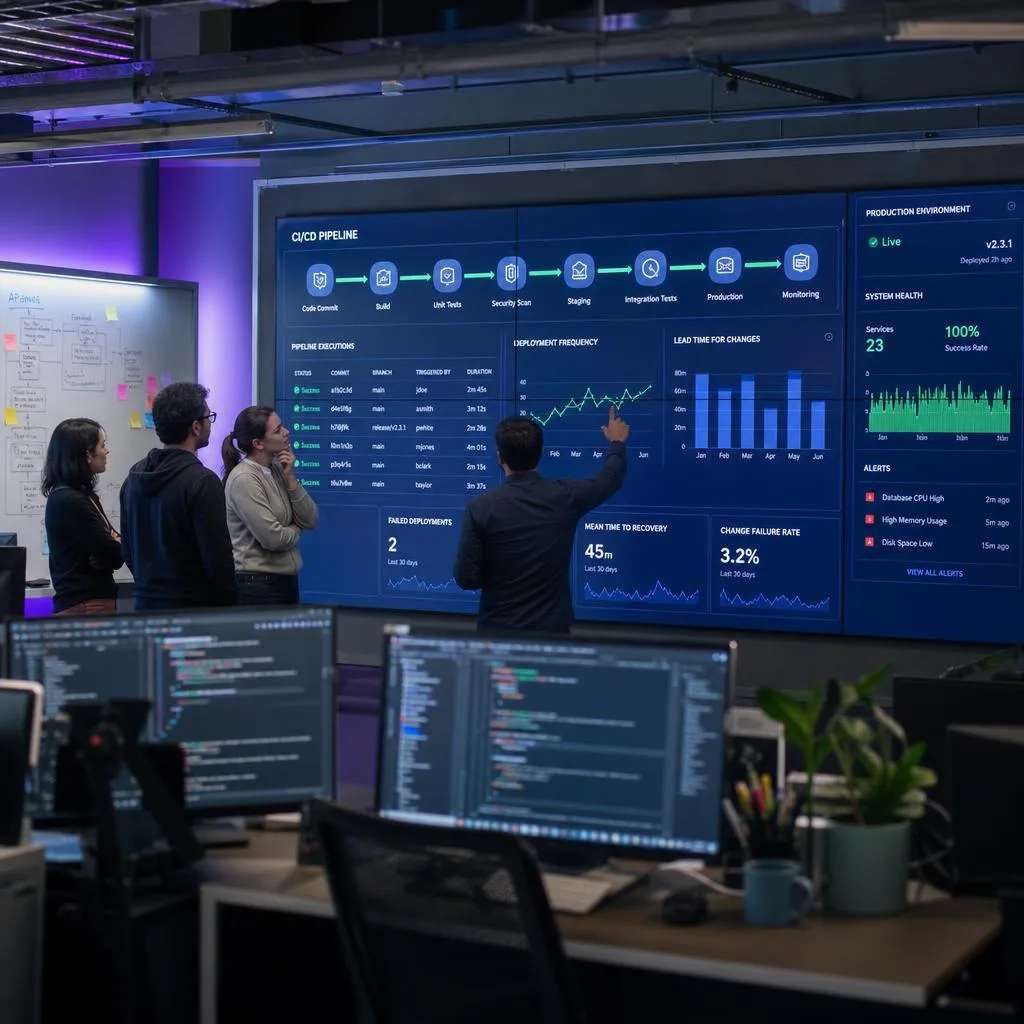
DevOps and Release Automation
This blueprint addresses engineering organizations where the release process is slow, manual, and high-risk, causing infrequent deployments, long feedback cycles, and significant engineering time spent on release coordination rather than product development.
Healthcare · UK & Europe
Patient Operations Modernization
Mid-sized UK and European healthcare providers operating across multiple specialties face mounting pressure on patient pathway efficiency as referral volumes grow beyond what paper-based and legacy digital processes can manage.
Discuss This Scenario
Talk to us about a similar challenge
We can walk you through how this approach would map to your organization’s specific context and requirements.
Get in Touch
- Dedicated project manager from day one
- Fixed-scope or continuous engagement options
- Full IP ownership: all deliverables are yours
- Response within one business day
Explore the full Solutions library
Browse all solution blueprints and case studies, filtered by business problem, industry, service, or evidence type.